


Description
Most important tour information
- Pickup time
- 8:30 AM – 9:00 AM Pickup window from your accommodation Details: Your exact pickup time or meeting details are sent via WhatsApp no later than the evening before departure.
- Arrival in the ending city
- 7:00 PM Approximate arrival time in the city where the tour ends
Highlights
- Receive our Chavin de Huantar visitor guide in English (pdf) before the tour
- Visit the impressive Chavin de Huantar archaeological site in one day
- Stop at scenic Querococha Lagoon on the way from Huaraz
- Discover Peru's ancient civilization at Chavín de Huántar Tour
What is included
Included
- Transport from and to Huaraz
- Pickup near the main square of Huaraz
- Our Chavin de Huantar visitor guide in English (pdf)
- Spanish-speaking guide
- Visit to Querococha Lagoon
- Visit to the Chavin de Huantar archaeological site
- Visit to the Chavin Museum
Not included
- Entrance fee to Chavin de Huantar (approximately 30 soles)
- Meals and drinks
- Personal expenses
- Horse ride at Querococha Lagoon, if available
Itinerary
Departure from Huaraz: We leave Huaraz in the morning, usually between 8:30 and 9:00 AM. After pickup near the main square, we begin the drive through the southern part of the Callejon de Huaylas.
Stop 1: Querococha Lagoon
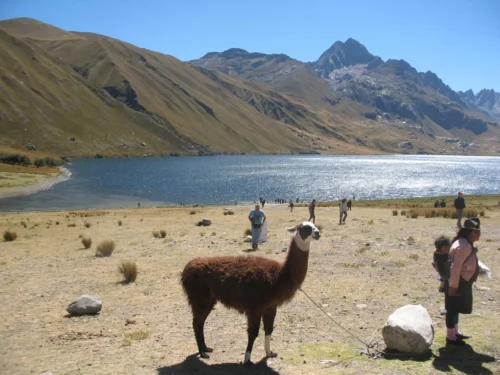
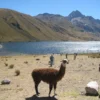
Our first main stop is at Querococha Lagoon, one of the most beautiful high-altitude lakes in the area. Here you can enjoy the mountain scenery, take photos, and breathe in the fresh Andean air.
Stop 2: Geological viewpoint and route through the Andes
We continue along the route and pass viewpoints and mountain landscapes on the way toward the Cahuish Tunnel. The highest point of the tour is 4516 meters above sea level.
Stop 3: Chavin de Huantar archaeological site
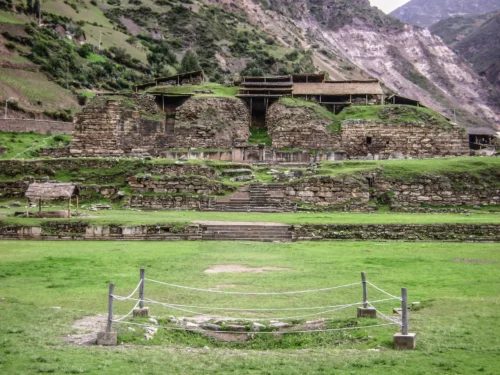
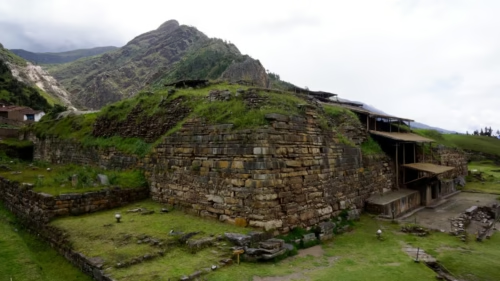
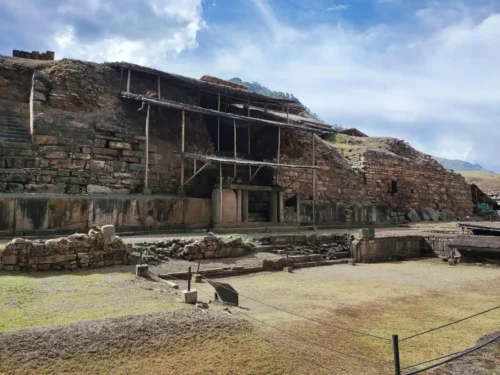
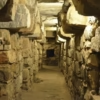
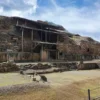
Once in Chavin, we visit the famous Chavin de Huantar temple. Here you explore the ceremonial center, including the circular plaza, temple structures, galleries, and other important areas of this archaeological complex.
Lunch break
After the visit to the ruins, there is time for lunch in the village. Lunch is not included, so you can choose what you prefer and pay directly at the restaurant.
Stop 4: Chavin Museum
After lunch, we continue to the Chavin Museum. Here you can see artifacts, replicas, and cultural information that help you understand the archaeological site in more detail.
Return to Huaraz
In the afternoon, we begin the drive back to Huaraz. Arrival is expected in the early evening, depending on the route and traffic.
Times are approximate and the order may change with weather, traffic, or local conditions.
Practical information
Meeting and timing
- End point
-
7:00 PM
Trail and tour details
- Difficulty
- Easy
- Tour duration
- 1 day
- Average group size
- 14 people
Full tour description
The Chavin de Huantar tour is one of the best day trips you can do from Huaraz. It combines mountain landscapes, local culture, and one of the most important archaeological sites in Peru. If you want to experience history and nature in one day without physical effort, this tour is a very good choice.
During the day, you travel from Huaraz through the southern part of the Callejon de Huaylas and continue into the Callejon de Conchucos. Along the way, you pass small Andean towns such as Recuay, Ticapampa, and Catac. One of the most scenic moments of the journey is a stop at Querococha Lagoon, a high-altitude lake surrounded by mountains where you can take photos and enjoy the quiet landscape.
After that, you continue through the Cahuish Tunnel and reach the highest point of the route at 4516 meters. The tour is easy, but this altitude exposure makes it a smart first activity in Huaraz. Many travelers choose this experience before starting more demanding hikes such as the Huayhuash Trek or the Santa Cruz Trek.
Once you arrive, you visit the famous Chavin de Huantar Peru archaeological complex. This ancient ceremonial center was built around 1200 BC and is considered one of the first major cultures in the Andes. Its location between the coast, mountains, and jungle made it an important hub for culture, religion, and exchange.
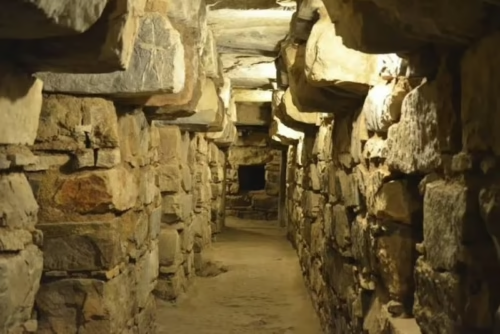
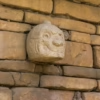
At the site, you explore the circular plaza, temple structures, and underground galleries that make the Chavin de Huantar temple so unique. These stone corridors were carefully designed and are still impressive today. Inside, you can also find important elements like the Lanzon monolith, a central religious symbol of the Chavin culture.
After visiting the ruins, there is time for lunch in the village. Lunch is not included, so you can choose a local restaurant and try typical dishes. In the afternoon, the experience continues with a visit to the Chavin Museum, where you can better understand what you saw at the site through artifacts, replicas, and clear explanations.
Our visitor guide for Chavin in English
Prepare for your Chavín de Huántar day tour by downloading our free Chavín visitor guide. It includes useful information about the archaeological site, its history, what to expect during the tour, and practical tips for your visit. We recommend downloading it before your tour so you can better understand and enjoy this important part of Peru’s history.
Download our Chavín visitor guide
Chavin de Huantar tour from Huaraz
This tour is ideal for travelers who want an easy but meaningful experience in Huaraz. It is perfect for backpackers, couples, and anyone interested in history without needing to hike long distances.
Because it is not physically demanding, you can enjoy the day at a relaxed pace while still reaching high altitude. This makes it one of the best ways to combine culture, scenery, and preparation for future adventures.
If you are looking for a complete and well-balanced day trip, this Chavin Huaraz tour gives you exactly that. You visit an important archaeological site, enjoy mountain landscapes, and gain a deeper understanding of Peru’s early civilizations in just one day.
Why this tour is a great acclimatization day from Huaraz
This Chavin de Huantar tour is one of the safest and most effective ways to acclimatize in Huaraz. The route gradually takes you to high altitude, with a maximum of 4516 meters, without requiring physical effort. This helps your body adjust naturally.
Because the tour is easy and includes only short walks, it is ideal as a first or second day in Huaraz. You still reach high altitude, but in a controlled and comfortable way with transport and guidance.
Many travelers choose this tour before starting multi-day treks such as the Huayhuash Trek or the Santa Cruz Trek. It allows you to enjoy the region while preparing your body properly.
At Wander Free Peru, we focus on clear communication, reliable logistics, and honest travel advice. We help you choose the right activities at the right time, so your experience in Huaraz is smooth, safe, and well organized.
What to bring
- Passport or ID card
- Cash in Peruvian soles for lunch and entrances
- Comfortable shoes
- Warm jacket for the afternoon
- Hat or cap
- Sunglasses
- Sunscreen
- Water
- Snacks
- Camera
- Personal medication if needed
Frequently asked questions
What is the significance of Chavin de Huantar?
Chavin de Huantar is one of the oldest and most important archaeological sites in Peru. It was a major ceremonial center of the Chavin culture and played a key role in the development of early Andean civilization.
Why was Chavín de Huantar important to the Chavin?
The site was a religious and cultural center where ceremonies and rituals took place. It connected different regions of the Andes and helped spread the influence of the Chavin culture.
What is the geographical significance of Chavín de Huantar's location?
Chavin de Huantar Peru is located between the coast, Andes, and jungle regions. This strategic location allowed the Chavin culture to connect trade routes and influence a wide area.
What was a major achievement of the Chavin?
A major achievement of the Chavin culture was the development of advanced stone architecture, underground galleries, and a strong religious system that influenced later Andean civilizations.
Who built Chavin de Huantar?
Chavin de Huantar was built by the Chavin civilization around 1200 BC. It is considered one of the first major cultures in Peru.
Who created Chavin de Huantar?
The site was created by the Chavin people, an early Andean culture known for their religious beliefs, art, and architecture.
What is Chavin de Huantar made of?
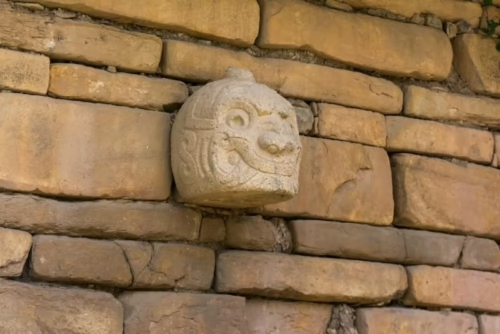
The structures are mainly built with large stone blocks. The site includes temples, plazas, underground passages, and carved stone features.
Why is Chavin de Huantar important?
The Chavin de Huantar temple is important because it represents one of the first complex societies in the Andes and influenced many later cultures in Peru.
Where can I see Chavin de Huantar?
You can visit Chavin de Huantar on a day trip from Huaraz. It is located in the Ancash region of Peru, on the eastern side of the Andes.
Can you visit Chavin de Huantar?
Yes, the site is open to visitors. You can explore the archaeological complex and also visit the Chavin Museum with our Chavin de Huantar tour.
Where is Chavin de Huantar located?
Chavin de Huantar Peru is located about 3 to 4 hours from Huaraz, in the Ancash region, on the eastern side of the Cordillera Blanca.
What is the temple at Chavin de Huantar?
The temple is a large ceremonial structure with plazas, galleries, and underground chambers used for religious rituals.
What unique architectural feature is found at Chavin de Huantar?
One unique feature is the system of underground galleries and ventilation channels, which may have been used for sound, water flow, or ceremonies.
What was Chavin de Huantar known for?
The site is known for its advanced architecture, religious importance, and stone carvings, including the famous Lanzon monolith.
What is a key feature of the Raimondi Stone found at Chavin de Huantar?
The Raimondi Stone is a carved granite slab showing a complex deity. A key feature is that the image changes appearance when viewed upside down.
What was the temple at Chavin de Huantar used for?
The temple was used for religious ceremonies and gatherings. It was a spiritual center for the Chavin culture.
What did the Chavín invent?
The Chavin developed early forms of architecture, irrigation systems, and religious symbolism that influenced later civilizations in Peru.