


Description
Most important tour information
- Pickup time
- 4:00 AM – 4:30 AM Pickup window from your accommodation Details: Your exact pickup time or meeting details are sent via WhatsApp no later than the evening before departure.
- Arrival in the ending city
- 5:00 PM Approximate arrival time in the city where the tour ends
What is included
Included
- Pick-up from your hotel in Cusco (historic city center)
- Round-trip tourist transport from Cusco
- Drop off Cusco city center (near Plaza de Armas, Cusco)
- Tour guide (English/Spanish speaking)
- Breakfast
- Buffet lunch
Not included
- Entrance fee to the Q’eswachaka Bridge (approx. 20 soles)
- Entrance fees for any additional locally managed attractions, unless stated otherwise in your booking
- Extra drinks, snacks or meals not mentioned in the itinerary
- Personal expenses
- Travel or medical insurance
- Optional tips for the guide and driver
Itinerary
Hotel pick-up in Cusco
Pick-up from your hotel takes place between approximately 4:00 and 5:00 in the morning. After collecting all participants, we begin our journey through the southern countryside of Cusco.
Breakfast in Cusipata
Our first main stop is in the town of Cusipata. Here, you can enjoy a buffet breakfast before continuing towards the province of Canas.
Visit to the Q’eswachaka Bridge
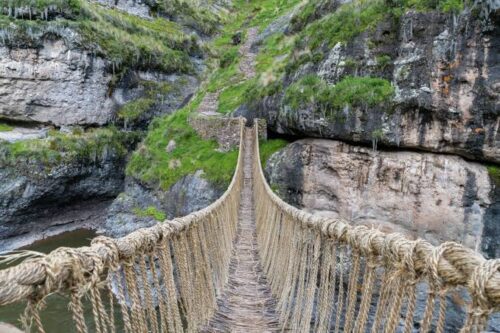
After breakfast, we continue to the community of Quehue, where the Q’eswachaka Bridge is located. On arrival, you will have time to explore the surrounding area, take photographs and admire the bridge above the Apurímac River.
Your guide will explain how the bridge is constructed, why it was important during the Inca period and how local communities continue renewing it every year. You will also learn about the traditional materials, community organisation and cultural rituals connected to the bridge.
Four lagoons viewpoint
After visiting the Inca bridge, we continue to viewpoints overlooking the Four Lagoons. Along the route, you can enjoy views of Pampamarca, Asnaqocha, Acopia and Pomacanchi.
The lagoons are surrounded by farmland, small Andean communities and wide mountain landscapes. We will make stops where possible so you can enjoy the scenery and take photographs.
Buffet lunch in Cusipata
We then return to Cusipata, where a buffet lunch will be waiting for the group. After lunch, we begin the return journey to Cusco.
Return to Cusco
Arrival in Cusco is expected at approximately 5:00 p.m. The exact return time may change depending on traffic, weather and local road conditions.
Times are approximate and the order may change with weather, traffic, or local conditions.
Practical information
Meeting and timing
- End point
-
5:00 PM
Trail and tour details
- Difficulty
- Easy
- Tour duration
- 1 day
- Average group size
- 12 people
Full tour description
Discover the last remaining traditional Inca rope bridge on our Queswachaka Bridge tour from Cusco. This full-day group tour takes you through the beautiful southern countryside of the Cusco region to the historic Q’eswachaka Bridge, also known in Spanish as Puente Q’eswachaka.
Located above the Apurímac River in the district of Quehue, the Queswachaka Bridge is one of the most special cultural attractions in Peru. Unlike the famous archaeological sites closer to Cusco, this area receives fewer visitors and offers a more peaceful experience in the Andes.
A visit to this Inca bridge near Cusco is ideal for travellers interested in Inca history, traditional Andean culture, mountain landscapes and places outside the main tourist routes.
A living example of Inca engineering
During the Inca Empire, an extensive road system called the Qhapaq Ñan connected cities, villages, administrative centres and ceremonial places across the Andes. This enormous network allowed people, goods, information and armies to travel throughout the Inca territory.
The high mountains, deep valleys and powerful rivers created many challenges for Inca engineers. To cross these natural barriers, the Incas constructed suspension bridges using vegetable fibres collected from the surrounding landscape.
These bridges were an important part of the Qhapaq Ñan road network. Most traditional Inca bridges disappeared over time, but the Q’eswachaka Bridge continues to be renewed using knowledge and techniques that have been passed from one generation to another.
The Puente Q’eswachaka is therefore more than an old structure. It is a living example of Inca engineering that is still protected and maintained by local communities today.
How is the Q’eswachaka bridge made?
The Q’eswachaka Bridge crosses a deep canyon above the Apurímac River in the province of Canas. It is made almost completely from local plant fibres rather than wood, metal or modern construction materials.
Local families collect and prepare a type of Andean grass. The grass is twisted into thin cords, which are then combined to make increasingly larger and stronger ropes. These ropes form the main structure, handrails and walking surface of the bridge.
Building the bridge requires detailed knowledge, physical work and close cooperation between the participating communities. Every part of the construction process follows traditional methods that have been preserved for centuries.
The name Q’eswachaka comes from Quechua. It is commonly connected to the ideas of a twisted rope and a bridge. The exact spelling may vary, which is why travellers may see names such as Queswachaka Bridge, Q’eswachaka Bridge, Q’eswachaca or Puente Q’eswachaka.
The annual renewal of the Queswachaka bridge
One of the most remarkable facts about the Queswachaka Bridge is that it is renewed every year. The Quechua-speaking communities of Huinchiri, Chaupibanda, Choccayhua and Ccollana Quehue work together to replace the old bridge with a newly woven structure.
The renewal is organised through a traditional form of community cooperation known as minka. Community members contribute materials, knowledge and physical work to complete a project that benefits and represents the whole community.
The process is not only about construction. Traditional ceremonies, cultural practices and respect for the surrounding mountains and the Pachamama, or Mother Earth, are also important parts of the renewal.
The bridge helps maintain a strong connection between the communities, their ancestors and their local environment. It also shows how traditional knowledge can continue to have meaning in the modern world.
UNESCO intangible cultural heritage
In 2013, UNESCO added the knowledge, skills and rituals connected to the annual renewal of the Q’eswachaka Bridge to the Representative List of the Intangible Cultural Heritage of Humanity.
This recognition does not only protect the physical bridge. It recognises the people, knowledge, community organisation and cultural traditions that make its annual renewal possible.
According to UNESCO, the four participating communities consider the bridge an important way to strengthen their social connections. It is therefore much more than a route across the river.
Visiting the Queswachaka Bridge gives travellers the opportunity to learn about a living Andean tradition directly connected to the history of the Inca Empire.
What to expect during the Queswachaka bridge tour
The Queswachaka Bridge tour begins early in the morning with pick-up from your hotel in Cusco. We then travel south through changing Andean landscapes, agricultural areas and small local communities.
After breakfast in Cusipata, the journey continues towards Quehue and the Apurímac River canyon. The drive is long, but it allows you to see a quieter and less commercial part of the Cusco region.
At the Q’eswachaka Bridge, you will have time to explore the area, take photographs and observe the traditional rope structure. Your guide will explain the history of the bridge, how it is renewed and why it remains culturally important to the local communities.
The landscape around the bridge is part of the experience. The deep canyon, open mountain scenery and flowing Apurímac River create an impressive setting for this traditional work of Inca engineering.
Visit the four lagoons of Cusco
The tour also includes panoramic stops near the four lagoons of Pampamarca, Asnaqocha, Acopia and Pomacanchi. These lagoons are located in a peaceful rural area surrounded by farmland, hills and traditional Andean communities.
Each lagoon has its own shape, colour and surrounding landscape. Depending on the weather and light, the water may reflect the mountains, clouds and blue Andean sky.
The Four Lagoons route adds more natural scenery to the Queswachaka Bridge tour and makes the journey much more than a visit to a single attraction. It combines history, culture and nature in one complete day trip from Cusco.
Why visit the Queswachaka bridge?
Many visitors come to Cusco to see Machu Picchu, the Sacred Valley and the famous Inca ruins around the city. The Queswachaka Bridge offers a different type of experience.
Instead of visiting only the remains of an ancient civilisation, you can discover a tradition that is still actively practised. The bridge is rebuilt by local communities using natural materials and knowledge inherited from their ancestors.
This makes the Q’eswachaka Bridge one of the best places near Cusco to understand the connection between the ancient Inca world and present-day Andean culture.
The tour is especially recommended for travellers who enjoy cultural experiences, photography, mountain scenery and less-visited destinations. It is also an interesting alternative for visitors who have already explored the main attractions in Cusco and want to discover another side of the region.
Responsible visit to the Puente Q’eswachaka
The Queswachaka Bridge is part of the cultural heritage of the local communities. Visitors should follow the instructions of their guide and respect all local rules during the visit.
Please do not pull the ropes, damage the plant fibres or leave rubbish in the area. Access to or across the bridge may be restricted depending on its condition, local decisions, maintenance work or safety requirements.
By visiting respectfully, travellers can help protect the area while supporting awareness of this unique Andean tradition.
Book your Queswachaka bridge tour from Cusco
Join Wander Free Peru and discover one of the most fascinating examples of living Inca heritage. Our Queswachaka Bridge full-day tour combines the last traditional Inca rope bridge, the Apurímac River canyon and the beautiful Four Lagoons of Cusco.
Travel beyond the most popular attractions and experience the history, scenery and living traditions of southern Cusco on this unforgettable cultural day trip.
Reliable information about the Q’eswachaka bridge
You can learn more about the history and annual renewal of the bridge on the official UNESCO Intangible Cultural Heritage website .
Information about its cultural recognition and traditional renewal can also be found on the official website of Peru’s Ministry of Culture .
What to bring
- A small daypack
- Warm clothes and comfortable layers
- A waterproof jacket or rain poncho
- Comfortable walking or hiking shoes
- A sun hat or cap
- Sunglasses
- Sunscreen
- Enough drinking water for the day
- Personal medication
- A camera or fully charged phone
- Cash in Peruvian soles for entrance fees and personal purchases
- Your passport or official identity document