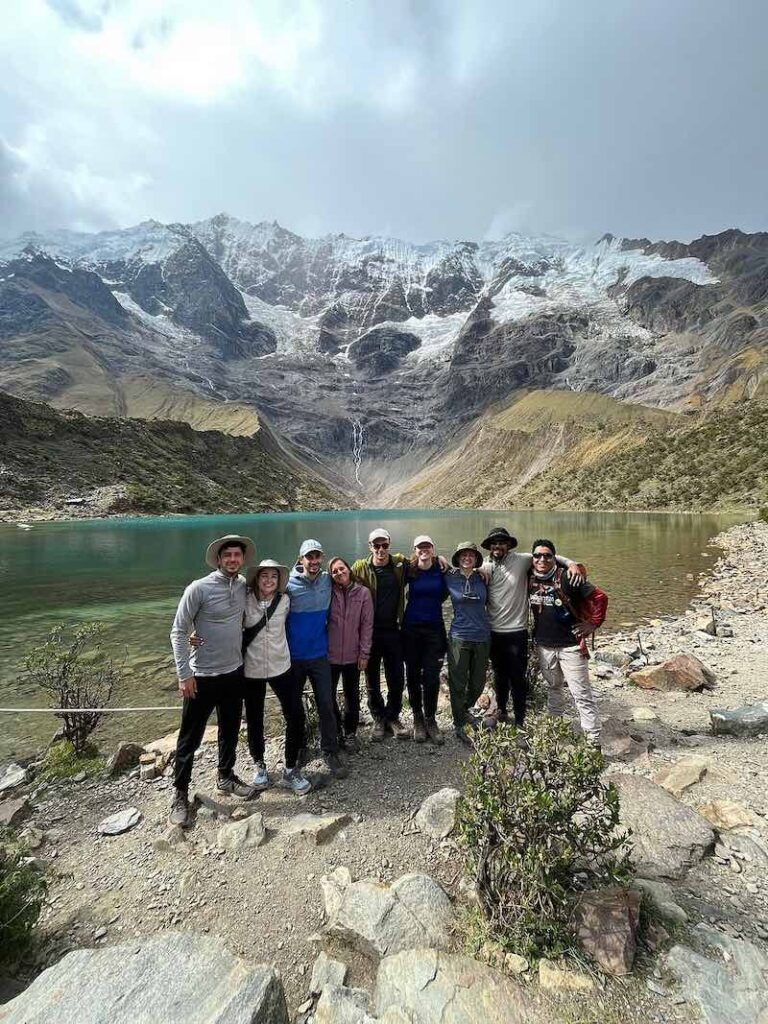
Santa Cruz and Salkantay Trek Package + Free Laguna 69 Tour

Bestseller

Peru tour package

Free Laguna 69 included Salkantay Trek to Machu Picchu 5 days - Backpacker Salkantay Trek to Machu Picchu 5 days - Backpacker5 days
Person in a red jacket overlooking a valley with turquoise lakes and snow-capped mountains on the Santa Cruz Trek Santa Cruz Trek 4 days - Comfort4 days

Combine the 4-day Santa Cruz Trek in the Cordillera Blanca with the 5-day Salkantay Trek to Machu Picchu in the Cusco region. This Peru trekking package also includes a free Laguna 69 day tour. Allow extra days for acclimatization in Huaraz, recovery and travel between Huaraz and Cusco.

Your package offer

Free Laguna 69 included

The Laguna 69 group tour is included at no extra tour price when booked as part of this package. The hike is challenging and reaches approximately 4,625 metres, so travellers should be acclimatized before joining.

Two classic Peru treks, plus a free Laguna 69 tour

Experience two different mountain regions with one trekking package. Start in Huaraz with the 4-day Santa Cruz Trek through the Cordillera Blanca, and enjoy a free Laguna 69 day tour. Then travel to Cusco for the 5-day Salkantay Trek to Machu Picchu.

Santa Cruz Trek: 4 days in the Cordillera Blanca

Hike through the Santa Cruz Valley, cross Punta Unión Pass and camp beneath the Cordillera Blanca’s mountain scenery. The trek is operated by Andes Treks, our own trekking team, with a licensed English-speaking guide, cook, camping equipment and a maximum group size of 12 hikers.

Free Laguna 69 day tour

The package includes the standard group tour to Laguna 69, with transport and a Spanish-speaking guide. The hike is challenging and reaches approximately 4,625 metres. The required Huascarán National Park entrance fee, meals, drinks and personal expenses are not included in the free tour.

Salkantay Trek: 5 days to Machu Picchu

Continue in the Cusco region on the five-day Salkantay route. The trek travels through high mountain landscapes, cloud forest and the area around Llactapata before reaching Aguas Calientes and visiting Machu Picchu. Machu Picchu tickets, return transport and optional mountain tickets depend on the option selected and confirmed in your booking.

Allow time for acclimatization and travel

Santa Cruz and Laguna 69 both take place from Huaraz, while Salkantay starts in the Cusco region. Plan several days in Huaraz before the high-altitude hikes, a recovery day between Laguna 69 and Santa Cruz, and time to travel from Huaraz to Cusco. This package needs more calendar days than the 10 days of trekking and tour activities.

Book both treks together and receive the Laguna 69 group tour as a package perk. Transport and accommodation between Huaraz and Cusco, hotel nights before or after the treks, and other unlisted services are not included.

  • Two multi-day treks in Peru Hike the 4-day Santa Cruz Trek in the Cordillera Blanca and the 5-day Salkantay Trek to Machu Picchu.
  • Free Laguna 69 group tour Add a guided day hike to one of the Cordillera Blanca’s best-known glacial lakes.
  • Operated by local trekking teams Santa Cruz is operated by Andes Treks, our own trekking team. Salkantay is provided by the selected local tour team.
  • Plan the full route with one package Coordinate your Huaraz hikes, travel to Cusco and Salkantay dates in one itinerary.

The tours in your package

Huaraz, Cordillera Blanca, Cusco, Salkantay, Machu Picchu

Tour 1

Salkantay Trek to Machu Picchu 5 days - Backpacker

5 days

Explore Salkantay Trek to Machu Picchu 5 days - Backpacker details
Important for this tour

What to expect on your Salkantay Trek to Machu Picchu

This trek crosses high mountain passes and lush cloud forests. Any time of the year, weather can affect trail conditions and the comfort of lodges along the way. Trails may be muddier, steeper, or more slippery, and in rare cases, the route may need to be changed for safety reasons. We always aim to book lodges in good condition, but during the rainy season, some humidity or moisture may still be present. We want you to feel well-informed and well-prepared before starting your trek. If you have any questions or doubts, feel free to ask us — we’re here to help.

Please note: Any missed sections of the trek — for personal, weather-related, or logistical reasons — are non-refundable. If you decide to skip part of the trek (for example, to arrive earlier in Aguas Calientes to purchase a Machu Picchu ticket), this is your own responsibility. Transport, logistics, and any coordination related to this decision are not included in the tour.

About Salkantay Trek to Machu Picchu 5 days - Backpacker

Join us on the Salkantay Trek to Machu Picchu 5 days – Backpacker, an incredible journey through Peru’s breathtaking mountains, jungles, and ancient ruins. Expert guides, stunning landscapes, cozy accommodations, and Machu Picchu make this trek a must for every adventurer.

Join us on the Salkantay Trek to Machu Picchu 5 days – backpacker for an unforgettable experience through Peru’s breathtaking landscapes. This trek is a perfect mix of adventure, stunning views, cultural discovery, and the grand finale at the world-famous Machu Picchu. Whether you’re an experienced trekker or simply looking for an exciting way to explore Peru, this guided journey ensures a safe and amazing adventure.

Day 1: Cusco to Soraypampa and Humantay Lake

Start your adventure
Your journey begins with an early pick-up from Cusco between 4:30 and 5:00 am. After a scenic two-hour drive to Mollepata, you’ll enjoy a hearty breakfast to prepare for the day ahead. From there, we head to Challacancha, where the trek officially begins.

Hike to Soraypampa base camp
A 3-hour hike takes you to the Soraypampa Base Camp, sitting at 3,900 meters (12,800 feet). Along the way, soak in the stunning mountain views. At the camp, a freshly prepared lunch awaits to refresh you.

Visit Humantay Lake
In the afternoon, embark on a 1.5-hour hike to the stunning Humantay Lake, located at 4,220 meters (13,850 feet). This turquoise gem, framed by snow-capped peaks, offers a breathtaking view. Your guide will share fascinating stories and facts about the area. After exploring the lake, return to the base camp for a warm cup of coca tea, a delicious dinner, and a restful night under the stars.

Day 2 of Salkantay Trek to Machu Picchu: Soraypampa to Salkantay Pass and Collpapampa

Climb to Salkantay Pass
Rise early for breakfast and start your trek to the highest point of the journey: Salkantay Pass at 4,650 meters (15,250 feet). The 3-hour climb rewards you with incredible views of the Salkantay, Humantay, and Tucarhuay mountains, among others.

Descend to Collpapampa
After reaching the pass, descend through diverse landscapes, passing glacial lakes and rocky trails. Stop for lunch at Wacracmachay, then continue down to Collpapampa at 3,800 meters (12,470 feet). Here, tea and a delicious dinner prepared by your cook await. Rest for the night in cozy domes at the campsite.

Day 3: Collpapampa to Lucmabamba

Explore the Cloud Forest
After breakfast, begin a 5.5-hour trek through lush jungle landscapes. This section of the trail takes you through Peru’s vibrant cloud forest, filled with coffee plantations, orchids, and medicinal plants. Your guide will point out interesting flora and fauna along the way.

Coffee Tour and Jungle Camp
At the campsite in Lucmabamba, enjoy lunch and a guided coffee tour to learn about local farming practices. In the evening, relax with tea and a freshly prepared dinner. For an extra treat, visit the nearby thermal baths in Cocalmayo (optional, not included) before settling in for the night in your jungle dome.

Day 4: Lucmabamba to Aguas Calientes via Llactapata

Hike the Inca Trail
The day begins with a nutritious breakfast before ascending an original section of the Inca Trail. After 2.5 hours, arrive at the Llactapata ruins, a lesser-known Inca site with panoramic views of Machu Picchu and Huayna Picchu.

Descend to Hidroeléctrica
Following a descent for lunch, continue along the trail to Hidroeléctrica. From here, choose to hike for 3 more hours or take a train to Aguas Calientes (optional, $38).

Stay in Aguas Calientes
End the day with a delicious dinner in Aguas Calientes, the gateway to Machu Picchu. Rest comfortably in a local hotel in preparation for the big day ahead.

Last day of Backpacker Salkantay Trek: Visit Machu Picchu and Return to Cusco

Explore Machu Picchu
Begin your day early with a 1.5-hour hike or a 30-minute bus ride ($12) to Machu Picchu. Upon arrival, your guide will lead a 2.5-hour tour, explaining the history, architecture, and culture of this ancient Inca city. Take in the famous panoramic views and explore key sites within the citadel.

Optional hikes
After the guided tour, you can hike Huayna Picchu or Machu Picchu Mountain for spectacular aerial views (pre-booking required, $60).

Return to Cusco
In the afternoon, return to Cusco by train or car, bringing your incredible 5-day journey to a close.

Why choose the Salkantay Trek to Machu Picchu 5 days – Backpacker?

  • Breathtaking scenery: From glaciers to jungles, each day offers unique and stunning landscapes.
  • Expert guides: Local guides ensure a safe, educational, and enriching experience.
  • Cultural insights: Learn about Inca history and traditions along the trail.
  • Comfortable campsites: Relax in cozy domes and enjoy freshly prepared meals each day.
  • Machu Picchu: End your adventure at one of the world’s greatest wonders.

With the Salkantay Trek to Machu Picchu 5 days, every step brings you closer to nature, history, and unforgettable memories. This is more than a trek; it’s a journey through the heart of Peru’s beauty and culture.

Highlights of the 5-day Salkantay Trek to Machu Picchu

  • Humantay Lake: A turquoise gem surrounded by snow-capped peaks.
  • Salkantay Pass: Breathtaking views at the trek’s highest point.
  • Cloud Forest: Explore lush vegetation, wildlife, and coffee plantations.
  • Llactapata Ruins: Stunning archaeological site with views of Machu Picchu.
  • Machu Picchu: Discover the awe-inspiring Lost City of the Incas.

What to expect on your Salkantay Trek to Machu Picchu

This trek crosses high mountain passes and lush cloud forests. Any time of the year, weather can affect trail conditions and the comfort of lodges along the way. Trails may be muddier, steeper, or more slippery, and in rare cases, the route may need to be changed for safety reasons. We always aim to book lodges in good condition, but during the rainy season, some humidity or moisture may still be present. We want you to feel well-informed and well-prepared before starting your trek. If you have any questions or doubts, feel free to ask us — we’re here to help.

Please note: Any missed sections of the trek — for personal, weather-related, or logistical reasons — are non-refundable. If you decide to skip part of the trek (for example, to arrive earlier in Aguas Calientes to purchase a Machu Picchu ticket), this is your own responsibility. Transport, logistics, and any coordination related to this decision are not included in the tour.

Background information about the Salkantay Trek

  • Salkantay Mountain: This snow-capped peak (6,271 m) is one of the highest in Peru and considered a protector deity by local communities.
  • Humantay Lake: Formed from glacier melt, the lake’s vibrant turquoise color is due to mineral deposits.
  • Cloud Forest: Home to exotic plants like orchids and medicinal herbs, as well as diverse wildlife including hummingbirds and butterflies.
  • Llactapata: These Inca ruins are part of an ancient network of trails leading to Machu Picchu and were used as a rest stop for travelers.
Pickup starts
04:30
Pickup ends
05:00
Person in a red jacket overlooking a valley with turquoise lakes and snow-capped mountains on the Santa Cruz Trek

Tour 2

Santa Cruz Trek 4 days - Comfort

4 days

Explore Santa Cruz Trek 4 days - Comfort details

About Santa Cruz Trek 4 days - Comfort

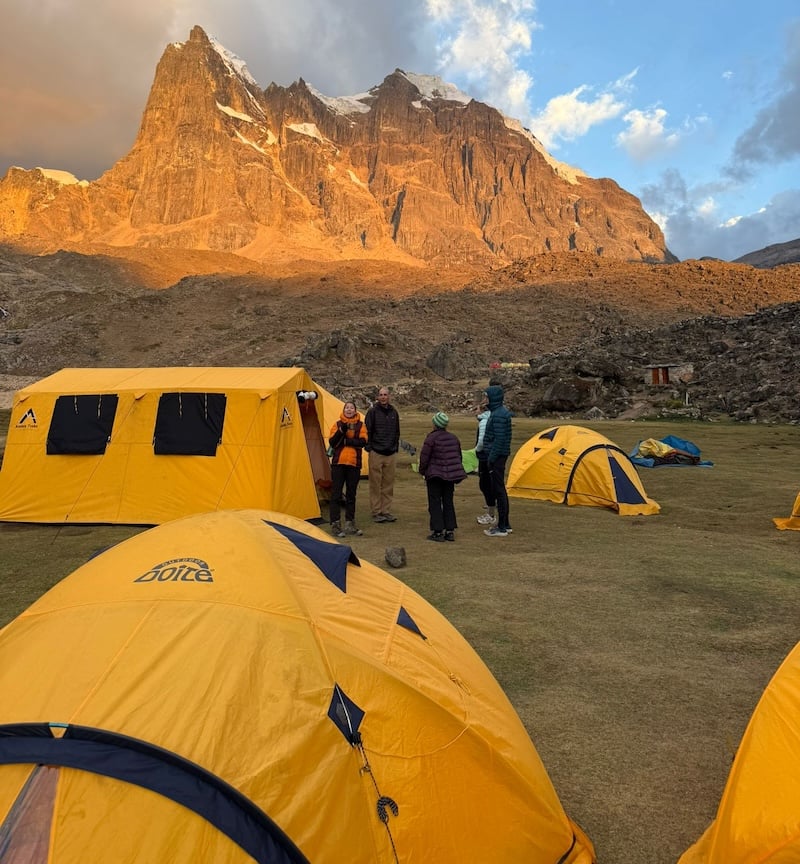
Join us on the Santa Cruz Trek 4 days and explore Peru’s Cordillera Blanca with a maximum of 12 hikers. Operated directly by Andes Treks, our departures include an official, English-speaking guide, a separate cook and camping equipment purchased new in 2026: Doite Pro Aconcagua tents, Marmot down sleeping bags, Sea to Summit liners and insulated inflatable mattresses.

Our Santa Cruz Trek: 4 days in Peru’s Cordillera Blanca. Walk beneath snow-covered mountains, follow clear rivers through open valleys, and spend three nights camping in the Peruvian Andes. The 4-day Santa Cruz Trek from Huaraz brings together the landscapes that make the Cordillera Blanca such a special place to hike: steep mountain walls, glacial lakes, quiet trails, and the crossing of Punta Unión Pass at approximately 4,750 metres.

This classic trek takes you through Huascarán National Park in northern Peru. It is a rewarding choice if you want several days in the mountains without committing to a long expedition. There is time to settle into camp, enjoy the changing light on the peaks, and experience the simple rhythm of walking, eating, and resting outdoors.

All our Santa Cruz Trek departures are operated directly by Andes Treks, the team behind our Huayhuash treks. Wander Free Peru helps with your reservation and preparation, while Andes Treks organises the trekking crew, camping equipment and mountain logistics. Every departure has a maximum of 12 hikers, a dedicated guide and a separate cook.

We want you to arrive knowing what the journey involves. Santa Cruz is a proper mountain trek. Good preparation, enough time to acclimatize, and realistic expectations will help you enjoy it much more.

Important Santa Cruz Trek information

  • Location: Cordillera Blanca, Huascarán National Park, Áncash, Peru.
  • Usual travel base: Huaraz, at approximately 3,050 metres.
  • Classic duration: 4 days and 3 camping nights.
  • Route: a crossing between Vaquería and Cashapampa. The trek can be walked in either direction.
  • Highest trekking point: Punta Unión Pass, approximately 4,750 metres / 15,584 feet.
  • Distance: approximately 45–50 kilometres for the classic crossing. Longer versions with side walks can reach roughly 50–60 kilometres.
  • Difficulty: moderate to challenging, mainly because of the altitude, sustained walking, and uneven ground.
  • Best general weather window: May to September, with April and October offering more changeable conditions.
  • Preparation: allow at least 3 days in the Huaraz region before departure, and more time if needed.
  • Group size: maximum 12 hikers on every departure, including high season.
  • Operation: directly operated by Andes Treks, with a dedicated guide and a separate cook.
  • Group trek price: US$250 per person. Check the inclusions, exclusions and optional extras for the full booking details.

Distances and walking times depend on the exact trail, campsites, optional visits, and group pace. Use your confirmed itinerary when planning your trip. The trek takes place inside a protected area, so check the current park entrance arrangements and whether the fee is included in your booking.

Our own Santa Cruz Trek operation

Before October 26, 2026, we arranged Santa Cruz departures through a local trekking partner. Traveller feedback highlighted concerns about camping equipment, large groups and communication. We took that feedback seriously and decided to operate the trek directly through Andes Treks.

Our own operation allows us to select the crew, provide the camping equipment and coordinate the logistics ourselves. We limit every departure to 12 hikers and send a separate guide and cook, giving each person a clear role throughout the trek.

The equipment and group arrangements described here apply to our departures from October 26, 2026. Older reviews may describe the previous partner-operated service.

Santa Cruz Trek briefing and luggage storage in Huaraz

A mandatory pre-trek briefing takes place at our Wander Free Peru office in Huaraz. Keep the evening before departure free and follow the meeting details sent by our team. Arrive with your questions, your planned clothing, and a clear idea of anything you still need to arrange.

The briefing is the time to review the route, expected weather, daily walking plan, pickup arrangements, included meals, drinking water and camping routine. We also explain the portable toilet system and how we manage waste at camp. Tell the team about relevant health conditions, medication, food allergies and dietary needs before the trek, rather than waiting until you reach the first campsite.

Pack separately for the trail and for storage

Luggage storage is available at our Huaraz office for items you will not need during the trek. Bring the luggage you want to store to the briefing and confirm the collection arrangements with our team. Keep your bags closed and labelled. Carry your identification, essential medication, money and valuables in your daypack.

A duffle bag is provided for your personal trekking belongings, with pack animals transporting it between camps. Follow the weight allowance stated in your booking and ask whether sleeping equipment counts towards that limit. Your duffle may travel separately from you during the day, so pack your waterproofs, warm layer, water, snacks and personal essentials where you can reach them.

Small groups and a dedicated trekking team

Our Santa Cruz Trek has a firm maximum of 12 hikers per departure. This limit applies throughout the year, including the busiest trekking months. Changes to the route or schedule do not change that maximum.

Every departure has a dedicated trekking guide and a separate cook. Your guide focuses on the route, communication and the group’s progress, while your cook prepares the included meals. Donkey drivers support the transport of camping equipment and personal duffle bags between camps.

This is a shared group trek, so you may travel with other couples, friends and solo travellers. If you prefer a departure exclusively for your own party, contact us for a private Santa Cruz Trek quotation.

What to expect on the Santa Cruz Trek

Several active days in a high mountain environment

Expect early starts, uphill sections, long descents, and a slower walking pace than you may be used to at home. Some stretches are comfortable valley paths; others are rocky, dusty, muddy, or uneven. The pass day is usually the main physical challenge. An optional lake visit can also create a long walking day.

Walk at a steady pace and tell your guide early if you are struggling. There is no benefit in rushing to keep up while hiding a headache, nausea, or unusual exhaustion. A good group experience depends on honest communication and respect for different walking speeds.

Mountain camping with specified equipment

Spend three nights camping with the sleeping equipment provided by Andes Treks. Our standard setup includes a Doite Pro Aconcagua tent shared between two travellers, a Marmot down sleeping bag, an individual Sea to Summit liner and an insulated inflatable mattress with an R-value of 4.6. Our tents, sleeping bags and inflatable mattresses were purchased new in 2026.

This remains a remote mountain camping experience. Do not plan around hot showers, heated rooms, reliable electricity or mobile coverage. Bring a headlamp, personal hygiene items and enough battery power for the trek.

Keep your sleeping clothes dry, organize your bag before dark, and have a warm layer ready when you stop walking. These small habits make evenings at camp much more comfortable. Shared campsites may also have other trekking groups, so quiet hours and consideration for your neighbours matter.

Santa Cruz Trek toilet tent: privacy

At camp, we provide a dedicated Cleanwaste privacy tent as a toilet. This gives you a proper enclosed space for greater comfort and privacy during your Santa Cruz Trek.

The toilet is only shared by our trekking group and is a portable camping facility, without plumbing or flushing water.

Food, drinking water, and route changes

Our separate cook prepares the meals included in your booking. Review the meal list carefully, especially the first and final days, and tell us about dietary requirements in advance so we can confirm the arrangements before departure.

Check when treated drinking water becomes available and start the trek with the amount of water advised by the team. Never assume clear river or lake water is safe to drink untreated. Carry a few familiar snacks that you enjoy eating during exercise.

Weather, trail conditions, access problems, and the health of the group can affect the plan. Your guide may change the schedule, skip a side walk, or turn back. Mountain views and visits to every named viewpoint cannot be guaranteed.

Transport and changes to the daily plan

Transport between Huaraz and the trailheads is included. Our team confirms your pickup location and timing before departure. Road conditions and stops can affect the journey time, so allow flexibility in your travel plans.

Your guide will explain the daily walking plan and any adjustments to the route, campsites or trekking direction. Andes Treks remains responsible for organising the operation, and every departure remains limited to 12 hikers.

Optional horse support on the Santa Cruz Trek

Horse support is not included in the trek price. If you would like additional support, contact us before departure so we can check local availability and explain the arrangements.

Indicative local prices:

  • Full-trek horse support: approx. S/600 (includes donkey driver and horse)
  • One day of horse support: approx. S/240 (for example for day 2)
  • Emergency horse arranged during the trek: from S/300 depending location

These prices are estimates and must be paid in cash, on-site. Availability, the route covered, pickup arrangements and the final cost must be confirmed before hiring.

An emergency horse is not included in the standard group departure and is not guaranteed to be immediately available. Arranging one during the trek depends on the location and local availability.

Horse hire, evacuation transport and personal medical expenses are paid separately. Check that your travel insurance covers the planned trekking altitude, medical treatment and evacuation.

Respect the national park and local communities

Keep rubbish in your bag, including tissues and food wrappers. Use the toilet system explained by your guide, keep soap out of streams and lakes, and avoid disturbing wildlife. Give pack animals space on narrow paths, respect farm gates, and ask before photographing local people.

Santa Cruz Trek equipment and packing guide

Pack for bright sunshine, cold evenings, wind, and rain on the same trip. Choose clothing you can add or remove easily. Test your footwear and daypack before travelling, and avoid making the trek the first outing for important equipment.

Camping equipment included in your trek

  • Doite Pro Aconcagua sleeping tent, shared between two travellers.
  • Marmot down sleeping bag with a stated lower-limit temperature rating of −11°C.
  • Individual Sea to Summit sleeping bag liner.
  • Insulated inflatable sleeping mattress with an R-value of 4.6.
  • Duffle bag (water repellent) for your personal trekking belongings, within the allowance stated in your booking.
  • Dining tent and cooking equipment for the trekking crew.
  • A dedicated Cleanwaste privacy toilet tent at camp.

Our sleeping tents, Marmot sleeping bags and inflatable mattresses were purchased new in 2026. These are the standard equipment items included in our group trek. If you prefer a private sleeping tent or need optional rental equipment, request it in advance and check availability.

The sleeping bag’s −11°C rating is a lower-limit rating, not a comfort rating or a guarantee that every traveller will feel warm at that temperature. These ratings mean different things. Tell our team if you usually feel cold at night so we can discuss your preparation before departure.

Your inflatable mattress provides cushioning and insulation beneath you. Its R-value of 4.6 describes its resistance to heat loss through the ground. Warm clothing and keeping your sleeping equipment dry remain important parts of your sleeping setup.

If you notice an equipment problem, tell the team as soon as possible so it can be addressed.

Clothing and footwear

  • Comfortable hiking footwear with a reliable grip, already worn on longer walks.
  • Quick-drying hiking shirts and trousers.
  • Thermal base layers and a fleece or similar warm mid-layer.
  • An insulated jacket for rest stops and camp.
  • A waterproof jacket and rain trousers.
  • A warm hat, gloves, sun hat, and neck covering.
  • Hiking socks, spare underwear, and dry socks for sleeping.
  • Light camp footwear if space and your luggage allowance permit.

Daypack and personal essentials

  • A comfortable daypack, usually around 25–35 litres, with waterproof protection.
  • Reusable water bottles or a hydration system with enough capacity for the day.
  • Sun protection: sunglasses, sunscreen, and lip balm with SPF.
  • A headlamp and spare batteries or a charged backup.
  • Personal medication, blister care, and a small personal first-aid kit.
  • Trekking poles if you use them, especially for long descents.
  • Toiletries, hand sanitizer, toilet paper, and bags for carrying out waste.
  • Insect repellent for lower valleys, plus a power bank and charging cable.
  • Waterproof inner bags for electronics, sleeping clothes, and important documents.

A rain cover alone may not keep everything dry during sustained rain. Protect important items inside the bag as well. Keep the load manageable: bring what you need for four mountain days, and leave spare city clothing in Huaraz.

Acclimatization before the Santa Cruz Trek

Andes Treks recommends a minimum of 3 days in the Huaraz region before Santa Cruz. Treat this as a starting point for planning, not a guarantee that you will be ready. Some people need longer, especially after arriving from sea level or after previous problems at altitude.

Take the first days gently. Rest after your journey, eat regularly, and begin with easy activity. Once you feel well, discuss a gradual preparation walk with the team. Do not make a demanding high-altitude day hike your first activity after arriving.

Being fit does not prevent altitude illness. Your body needs time to adjust, and sleeping higher can bring new symptoms even if you felt comfortable in Huaraz. If you have a headache, nausea, or unusual fatigue before departure, tell the team and reassess the plan.

Allow room in your travel schedule for extra rest. Reaching Huaraz just in time for the briefing is not a suitable preparation plan for a trek that crosses 4,750 metres.

Santa Cruz Trek health, altitude sickness, and medication

Speak with a qualified clinician before travelling if you have a medical condition, are pregnant, have had serious altitude illness, or are unsure whether this trek is suitable. Describe the actual trip: several days of walking, camping at altitude, and limited access to medical care.

Recognize symptoms and act early

Altitude illness can cause headache, nausea, dizziness, loss of appetite, and unusual tiredness. Tell your guide immediately. Do not continue higher while you have altitude illness symptoms. Symptoms that worsen despite rest at the same altitude require descent and medical assessment.

Confusion, difficulty walking straight, or breathlessness at rest are emergency warning signs. They need urgent action, including descent and medical help. Do not wait until morning or try to finish the route first.

Bring your own medication and prepare for remote travel

Carry enough regular medication for the whole trip, with extra supplies in case of delays. Keep essential doses in your daypack, protected from moisture. Tell the team about allergies and any medicine that may affect your care in an emergency.

Ask your clinician whether altitude medication, such as acetazolamide, is appropriate for you. Do not borrow someone else’s prescription or use medication as a reason to ignore symptoms. Avoid alcohol during early acclimatization and do not take sedating sleep medicines without medical advice.

Choose travel insurance that explicitly covers your planned trekking altitude, medical treatment, and evacuation. Check the wording with your insurer. Carry the policy number and emergency contact details, and understand that access to help can take time in remote terrain.

How long is the Santa Cruz Trek?

The classic Santa Cruz Trek takes 4 days and 3 nights. The first and last days usually combine walking with road transport between Huaraz and the trailheads. Four days describes the trekking programme; it does not include your journey to Huaraz or the preparation time before departure.

For a practical travel plan, allow at least three preparation days in the Huaraz region, four trekking days, and some flexibility afterwards. Avoid a tight connection on the final evening. Road conditions and the group’s progress can affect your return time.

A typical 4-day Santa Cruz route

The following outline shows the common Vaquería-to-Cashapampa direction. The exact camps, direction, and side walks depend on your confirmed departure.

  1. Day 1: Huaraz to Vaquería and the Huaripampa Valley. Travel to the trailhead and begin walking through the valley towards a camp in the Paria area.
  2. Day 2: Punta Unión Pass and Taullipampa. Climb to the main pass, then descend into the Santa Cruz Valley for the next camping night.
  3. Day 3: Santa Cruz Valley and an optional Arhuaycocha visit. Continue through the valley towards Llamacorral. A side walk towards Arhuaycocha Lake adds distance and depends on the itinerary, conditions, and available time.
  4. Day 4: Cashapampa and return to Huaraz. Descend towards the trailhead and travel back to town.

Some operators offer a three-day version. This compresses the schedule and may leave out side walks. A shorter itinerary does not remove the altitude challenge and is not automatically a better option for someone with limited experience.

Why choose the 4-Day Santa Cruz Trek?

Four days gives the journey a useful balance. You experience a full mountain crossing and several nights outdoors, while keeping the trek short enough to combine with other places in Peru.

  • Time to enjoy the route: the journey has room for breaks and camp life, rather than focusing only on reaching the next stop.
  • A rewarding mountain goal: crossing Punta Unión gives the trek a clear highlight and a sense of achievement.
  • Variety within one trip: village paths, open valleys, lakes, and high mountain scenery change as you walk.
  • A manageable introduction to multi-day trekking: prepared hikers can experience camping at altitude without committing to a much longer circuit.
  • Space for an extra viewpoint: where the programme and conditions allow, a side walk can add another perspective on the surrounding peaks.

Choose four days because you want time on the trail. You still need to prepare for long walking days and arrive acclimatized.

What your US$250 pays for

When comparing Santa Cruz treks, look beyond the route and compare the group size, sleeping equipment and staffing. Our US$250 group trek includes a maximum of 12 hikers, direct operation by Andes Treks, a dedicated guide and a separate cook, together with the equipment specified on this page.

That includes a Doite Pro Aconcagua tent, Marmot down sleeping bag, individual Sea to Summit liner, insulated inflatable mattress and a portable Cleanwaste toilet tent at camp. These practical differences matter when you spend four active days and three nights in the mountains.

Santa Cruz Trek elevation, distance, and difficulty

How high does the Santa Cruz Trek go?

The highest point on the classic walking route is Punta Unión Pass at approximately 4,750 metres. Common camps include Paria at around 3,870 metres, Taullipampa at around 4,250 metres, and Llamacorral at around 3,750–3,760 metres. Actual tent locations vary.

The altitude you sleep at matters as well as the highest point you cross. You will spend several nights well above sea level, so good preparation remains important even on a day that mostly goes downhill. A road transfer via Portachuelo de Llanganuco can also briefly reach about 4,767 metres; this is separate from the trek’s highest walking point.

How far will you walk?

PROMPERÚ describes the classic Llanganuco–Santa Cruz route as approximately 47 kilometres. Different trailhead locations, camps, and detours explain why published totals vary. A programme that includes Arhuaycocha can be considerably longer than a direct crossing. Compare the full itinerary rather than assuming every four-day Santa Cruz trek covers the same distance.

Is Santa Cruz suitable for beginners?

It can suit someone new to multi-day trekking who already enjoys long hikes, has prepared well, and is comfortable camping. It is a poor choice as a first attempt at regular exercise. In normal conditions, the classic route does not require technical climbing, but altitude and weather can make an ordinary trail feel demanding.

Prepare with longer walks on hills and uneven ground. Practise descending as well as climbing, and walk with the daypack you plan to carry. Ideally, you should feel comfortable completing several hours of walking and doing another active day afterwards. This builds endurance; it does not replace acclimatization.

Santa Cruz Trek weather and best time to go

May to September is generally the best period for the Santa Cruz Trek. These months usually offer a better chance of dry walking conditions and clear mountain views. June, July, and August are popular choices for a trip focused on the high peaks.

Huascarán National Park lists May to October as its recommended visiting period, while also identifying October to April as the rainy season. The overlap reflects a transition: the seasons do not change on a fixed date, and October can be much less settled than the middle of the dry season.

Cold nights, strong sunshine, and sudden changes

Prepare for nights below freezing at high camps. A sunny valley can feel warm while an exposed pass feels cold in the wind. Rain, hail, and snow are possible even during the drier months. Keep waterproofs and warm clothing accessible every day.

A forecast for Huaraz does not describe conditions at Taullipampa or Punta Unión. Elevation, cloud, wind, and exposure all affect how cold you feel. Ask about the expected conditions close to departure rather than packing around one average temperature.

Santa Cruz Trek weather by month

This month-by-month guide is a planning interpretation of the region’s usual seasons, not a forecast or a set of measured campsite averages. Conditions vary between years. Departure availability and route suitability must be checked separately.

January: rainy-season trekking conditions

January falls in the wet season. Prepare for rain, damp ground, and cloud that may hide the peaks. If this is your only travel window, keep your schedule flexible and check local trail and road conditions before committing to the trek.

February: plan for wet trails and limited visibility

February remains a rainy-season month. Wet equipment and slippery ground can make camping and walking more demanding. Choose this period only with realistic expectations about views and with a confirmed assessment that the proposed departure can operate.

March: rain remains part of the plan

March is still within the wetter part of the year. A few clear mornings do not mean the dry season has begun. Waterproof packing and flexibility remain important, and a plan based on uninterrupted mountain views may be disappointing.

April: a transition towards the trekking season

April can offer improving conditions as the main dry season approaches, although showers remain possible. Expect a mix of weather rather than a dependable dry spell. Check recent reports, particularly if your visit falls early in the month.

May: a strong choice for a Santa Cruz Trek

May usually brings a more favourable balance for trekking. It is a useful month to consider if you want to travel near the start of the dry season. Keep rain protection in your pack, as the change from wetter weather can be gradual.

June: dry-season walking and cold camps

June is within the main trekking window. Plan around cold evenings and carry the layers you need once the sun leaves camp. Good visibility can reward an early start, but warm sunshine during a break is not a reason to leave your jacket behind.

July: popular trekking dates in the dry season

July is a popular choice for Santa Cruz. Arrange your preferred departure and any rental equipment ahead of time. Pack carefully for freezing nights, and expect to share some campsites with other groups rather than having the valley to yourself.

August: good seasonal prospects for mountain views

August remains within the drier trekking season and is another popular travel month. Prepare for cold camps and wind on exposed ground. Give yourself enough preparation days in Huaraz even when a short weather forecast looks excellent.

September: late dry-season trekking

September is often a good option for a late-season trip. Weather can become more changeable as the month progresses, so keep the same complete packing list you would use earlier in the year. Check availability rather than assuming every date has a group.

October: more variable weather

October sits around the return of wetter conditions. Good trekking days are possible, but a flexible attitude becomes more valuable. If your dates are fixed, discuss current conditions with the team and leave room for changes to the route or schedule.

November: wet-season preparation matters

November is within the rainy season. Do not judge the whole route by a dry afternoon in Huaraz. Confirm whether a suitable departure is available, and be prepared for a different experience from the clear-sky photographs usually used to promote the trek.

December: check conditions before booking

December brings wet-season uncertainty to a multi-day camping trip. Holiday dates do not guarantee suitable mountain conditions or regular departures. If panoramic views are your main reason for visiting, consider whether you can travel during the drier months instead.

Who is the Santa Cruz Trek best for?

Santa Cruz is a good match for active travellers who enjoy nature, are willing to prepare, and want a few days away from normal comforts. You do not need to be a mountaineer, but you do need patience with mountain conditions and enough fitness for consecutive walking days.

  • Regular hikers: a rewarding next step if you are ready to add camping and altitude to your experience.
  • Couples and friends: a shared outdoor challenge with time together on the trail and at camp.
  • Solo travellers: a group departure can provide company and an organized way to experience the route.
  • Landscape photographers: varied scenery and changing light, with the understanding that weather and the group schedule come first.
  • Travellers with a shorter mountain itinerary: four trekking days leave room for other destinations, provided you also allow time to acclimatize.

If you need daily hot showers, dependable internet, or easy access to medical facilities, this camping route may not meet your needs. Families should discuss children’s hiking experience and the suitability of the itinerary with the team before booking. Age alone does not establish readiness.

Santa Cruz Trek vs Huayhuash Trek: which should you choose?

Both treks offer impressive mountain scenery from a Huaraz travel base. Santa Cruz is the shorter choice, with one main pass and three camping nights. Longer Huayhuash circuits involve repeated high passes and more consecutive days of effort, so they ask more of your endurance and recovery.

Choose Santa Cruz if you want a complete mountain crossing within a shorter visit. Consider Huayhuash if a longer trekking journey is the main purpose of your trip and you are prepared for its physical demands. Short Huayhuash itineraries also exist, so compare the specific route rather than the destination name alone.

Explore our 8-day Huayhuash Trek if you are considering a longer adventure. Completing Santa Cruz can help you learn how you respond to camping and altitude, but it does not automatically make you ready for every Huayhuash route.

Santa Cruz Trek vs Salkantay Trek: Huaraz or Machu Picchu?

The main difference is the journey you want. Santa Cruz explores the Cordillera Blanca from Huaraz. Salkantay usually starts from the Cusco region and is commonly sold as a four- or five-day journey that includes a visit to Machu Picchu.

Classic Salkantay itineraries cross a pass at about 4,630 metres before descending towards warmer valleys and cloud forest. Accommodation can range from camping to fixed lodges, depending on the package. Santa Cruz centres on high mountain valleys and tent camping.

Choose Santa Cruz for a compact alpine trekking experience in northern Peru. Choose Salkantay if combining a mountain walk with Machu Picchu is your priority. Neither route is automatically easy: compare walking distances, sleeping elevations, support, and preparation time. Santa Cruz does not include Machu Picchu, and a Salkantay booking should clearly state its entry-ticket arrangements.

Santa Cruz Trek vs Ausangate Trek: comparing altitude and experience

Ausangate is in the Cusco region’s Cordillera Vilcanota. Its trekking routes feature glacial lakes, open highland landscapes, and communities with a strong tradition of llama and alpaca herding. Routes vary, but several reach passes above 5,000 metres; Palomani is commonly described at approximately 5,100–5,200 metres.

Compared with the classic Santa Cruz crossing, many Ausangate itineraries keep you at higher elevations for longer. This can make preparation, cold-weather equipment, and recovery especially important. Some programmes use tents, while others use mountain lodges. Check the actual overnight elevations and daily route before deciding.

Choose Santa Cruz if you want a shorter camping trek with a lower maximum walking altitude than many Ausangate routes. Consider Ausangate if you are specifically drawn to the high landscapes and local culture of the Vilcanota region. Rainbow Mountain is included in some Ausangate programmes, but it is not part of every itinerary.

Book your Santa Cruz Trek 4 days with Wander Free Peru

Join a departure operated directly by Andes Treks, with a maximum of 12 hikers, a dedicated guide, a separate cook and the camping equipment specified on this page.

Tell our Huaraz team your preferred dates, group size, recent hiking experience and how long you can spend acclimatizing. We can explain the available departures, preparation and booking details before you commit.

Review the written inclusions carefully, including transport, meals, camping equipment, luggage support, park fees and optional rentals. Choose your departure with enough preparation time, pack for mountain weather and arrive ready to take each day at a steady pace.

Ready to plan your 4-day Santa Cruz Trek? Contact Wander Free Peru to discuss dates, preparation and the right departure for your trip.

Pickup
Pickup from selected hotels / zone only
Pickup zone

Huaraz city center

Pickup starts
05:00
Pickup ends
05:30
Arrival time
16:00
Arrival city
Huaraz
End point
Wander Free Peru office in Huaraz
Languages
English, Spanish
Group size
Maximum 12
Minimum participants
6
Dietary options
Vegetarian, Vegan, Food allergies on request
Luggage storage

Bring your luggage to store with us to the briefing.

Mobile signal
No mobile signal
Device charging
No charging — bring a power bank
Passport or ID
Copy or photo accepted
Travel insurance
Recommended
Hiking distance
50.6 km
Starting altitude
3460 m
Highest altitude
4750 m
Drive to trailhead
6 h
Route type
Point to point
Trail surfaces
Dirt trail, Rocky, Steep sections, Many steps, Mud possible, River crossings
Fitness level
Good — regular cardio/hiking
Technical experience
Basic hiking experience recommended
Drinking water
Natural sources; treatment required
Toilets on trail
Camp toilets provided

Santa Cruz Trek 4 days - Comfort tour map

How many days is the Santa Cruz Trek?

The Santa Cruz Trek 4 days 3 nights is the most popular option. This classic route offers a perfect balance of challenge and beauty, allowing trekkers to experience the highlights of the Cordillera Blanca in just four days.

How long is the Santa Cruz Trek in kilometers?

The full Santa Cruz Trek distance is around 50 to 60 kilometers, depending on the starting and ending points. It’s one of the best multi-day hikes in Huaraz Peru, known for its breathtaking scenery and well-marked trails.

What is the highest point of the Santa Cruz Trek?

The highest point is Punta Unión Pass, located at 4,750 meters. This is a scenic highlight of the trek and offers panoramic views of the Santa Cruz mountains and the surrounding Cordillera Blanca.

What is the elevation gain on the Santa Cruz Trek?

The trek includes significant elevation changes, especially on the second day when crossing Punta Unión. Trekkers ascend from about 3,800m to 4,750m, so proper acclimatization in Huaraz is essential.

Is the Santa Cruz Trek hard?

The Santa Cruz Trek difficulty is moderate to challenging due to the high altitude. It’s accessible for fit hikers, especially when done with a guided trek tour that includes support, meals, and gear transport.

Is the Santa Cruz Trek worth it?

Absolutely. The Santa Cruz Trek Peru is considered one of the most beautiful treks in South America. With stunning views of glacial lakes, snow-capped peaks, and peaceful valleys, it’s a bucket-list experience for anyone visiting Huaraz.

How much does the Santa Cruz Trek cost?

The trek cost depends on the type of tour. Our guided Santa Cruz trek 4-day tour includes transportation, meals, quality camping gear, and an official, English speaking guide. It costs US$ 250 per person.

Do I need to pay extra for the inflatable mattress or sleeping bag liner?

No. The insulated inflatable mattress with an R-value of 4.6, foam mattress, Marmot down sleeping bag and individual Sea to Summit liner are included in the standard US$250 trek price.

Does the group limit change during high season?

No. Our maximum is 12 hikers on every departure, including during the busiest trekking months.

Will our group have the campsite to itself?

Other trekking groups may use the same camping areas. Our maximum of 12 applies to your Andes Treks hiking group, rather than everyone staying at the campsite.

Is the toilet a hole in the ground?

Our group uses a Cleanwaste folding portable toilet with a seat, inside a dedicated privacy tent. It is a shared camping toilet without plumbing or flushing water.

Does better equipment mean luxury camping?

This is a remote mountain camping trek. Our specified equipment adds cushioning, ground insulation and practical comfort, but you should still expect cold nights, changing weather and limited facilities. There are no heated rooms, reliable charging facilities or hot showers along the route.

Clear turquoise waters of Laguna 69 reflecting the snow-capped mountains and rocky terrain under a blue sky with clouds

Free tour included

Laguna 69

1 day

Explore Laguna 69 details

About Laguna 69

Embark on a scenic hike to Laguna 69, a stunning aquamarine glacial lake at 4600m. This tour includes transportation, a guide, view of lake Llanganuco and hike to lake 69. Perfect for adventure seekers and nature lovers.

Laguna 69 is a stunning aquamarine glacial lake located at 4600 meters in the Cordillera Blanca. Situated on the flanks of the Pisco and Chacraraju mountains, it is considered one of the most beautiful glacial lakes in the region. Many guides regard the hike to Laguna 69 as one of the most scenic and impressive in the Huascarán National Park.

Group tour

  • Includes transportation (hotel pickup and final drop-off at the Plaza de Armas), a Spanish-speaking guide.

Background information about Laguna 69 in Huaraz

Location and significance

Laguna 69 is one of the most popular hiking destinations in the Cordillera Blanca. Its unique aquamarine color, surrounded by towering peaks and dramatic landscapes, makes it a must-visit for nature lovers and adventure seekers. The lake sits at the base of the Pisco and Chacraraju mountains, offering a breathtaking backdrop for photos and relaxation.

The beauty of the Laguna 69

The hike to the lake 69 is filled with stunning natural features. Hikers pass through lush valleys, cross over clear mountain streams, and walk alongside cascading waterfalls. The trail itself is a visual feast, with diverse flora and fauna, and the sight of snow-capped peaks in the distance.

Recreational activities

The hike to Laguna 69 is moderately challenging and takes about 3-4 hours one way. It is ideal for those looking for an adventurous day trip. The reward at the end of the hike is the view of the pristine lake, where hikers can relax, have lunch, and take in the serene environment. The clear waters of the lake 69 reflect the surrounding mountains, creating a picture-perfect scene.

Accessibility

The starting point of the hike to the lake is accessible by road from Huaraz. The journey to the trailhead takes about 3 hours, passing through picturesque landscapes and small Andean villages. The hike itself, while challenging, is well worth the effort for the incredible views and the experience of reaching such a high-altitude destination.

Laguna 69 is not only a natural wonder of the Cordillera Blanca. It offers hikers an unforgettable experience and a chance to connect with the stunning landscapes of the Huascarán National Park.


Pickup
Pickup from selected hotels / zone only
Pickup zone

Huaraz city center

Pickup starts
04:30
Pickup ends
05:00
Arrival time
19:30
Arrival city
Huaraz
End point
Central point in Huaraz city center
Languages
Spanish
Mobile signal
Intermittent
Device charging
No charging — bring a power bank
Accessibility
Not wheelchair accessible
Passport or ID
Copy or photo accepted
Travel insurance
Recommended
Hiking distance
13.7 km
Hiking time
6 h
Elevation gain
847 m
Starting altitude
3920 m
Highest altitude
4625 m
Drive to trailhead
2 h
Route type
Out and back
Trail surfaces
Dirt trail, Rocky, Steep sections, Many steps
Fitness level
Good — regular cardio/hiking
Technical experience
Basic hiking experience recommended
Drinking water
Traveler must carry all water

Laguna 69 tour map

Example itinerary for your package

  1. Day 1

    Laguna 69

    Join us on the lake 69 day hike to acclimatise for the Santa Cruz Trek 4 days

    Free tour included
    Tour itinerary
    • Morning:
      • 4:30 – 5:00 AM: Pick up from your hotel.
      • Travel to our first stop for breakfast.
      • 7:00 AM: Breakfast.
      • Travel to the starting point of the hike.
    • Afternoon:
      • Begin the hike to Laguna 69.
      • Enjoy the scenic trek, passing by waterfalls and beautiful landscapes.
      • Arrive at Laguna 69, located at 4600 meters.
      • Take time to rest, have lunch, and enjoy the breathtaking views.
    • Evening:
      • Return hike to the starting point.
      • Travel back to Huaraz.
      • 7:00-7:30 PM: Drop off at the Plaza de Armas.
  2. Day 2

    Rest and prepare day for the Santa Cruz Trek

  3. Days 3–6

    Santa Cruz Trek 4 days - Comfort

    Tour itinerary

    Day 1: Huaraz – Llanganuco Lakes – Portachuelo – Vaquería – Paria

    Your Santa Cruz Trek begins with an early departure from Huaraz. We travel through the Callejón de Huaylas to Yungay before entering Huascarán National Park and the Llanganuco Valley.

    The road passes the turquoise Chinancocha and Orconcocha lakes before climbing to Portachuelo de Llanganuco, approximately 4,767 m above sea level. Weather permitting, the pass offers views of Huascarán, Huandoy, Chopicalqui and Chacraraju.

    We descend to Vaquería, where our hike begins at approximately 3,467 m. The trail passes small Andean communities and cultivated fields before continuing into the Huaripampa Valley. After walking through open grasslands, we reach Paria for our first night camping in the Cordillera Blanca. At camp, settle into your tent and enjoy a meal prepared by our cook while your guide explains the following day’s route.

    • Driving distance: approximately 125 km / 77.7 miles
    • Driving time: approximately 6 hours
    • Hiking distance: approximately 8.8 km / 5.5 miles
    • Hiking time: approximately 2.5–3 hours
    • Elevation gain: approximately 437 m / 1,434 ft
    • Elevation loss: approximately 99 m / 325 ft
    • Campsite: Paria, approximately 3,808 m / 12,493 ft
    • Difficulty: Moderate

    Day 2: Paria – Morococha – Punta Unión Pass – Taullipampa

    Today we cross Punta Unión, the highest hiking point of our Santa Cruz Trek 4 days. Leaving Paria early, we follow a glacial valley past wetlands and small mountain lakes before beginning the steeper climb above Morococha.

    Your guide organises breaks along the ascent, with opportunities to rest, drink water and appreciate the surrounding mountains. The climb is demanding at this altitude, making this one of the most challenging days of the trek.

    At Punta Unión Pass, approximately 4,733 m, the trail opens onto views of the Santa Cruz Valley, glacial lakes and surrounding peaks. In clear conditions, this is one of the most memorable viewpoints of the route.

    We then descend towards Taullipampa, where we spend the night beneath the impressive mountain walls of Taulliraju. Rest at camp while our cook prepares dinner.

    • Hiking distance: approximately 11.5 km / 7.1 miles
    • Hiking time: approximately 7–7.5 hours
    • Elevation gain: approximately 951 m / 3,120 ft
    • Elevation loss: approximately 584 m / 1,916 ft
    • Highest point: Punta Unión, approximately 4,733 m / 15,528 ft
    • Campsite: Taullipampa, approximately 4,182 m / 13,720 ft
    • Difficulty: Challenging

    Day 3: Taullipampa – Alpamayo Base Camp Area – Arhuaycocha Lake – Llamacorral

    We begin with a side hike towards the Alpamayo base camp area and Laguna Arhuaycocha. This excursion takes us into a glacial side valley, with opportunities to admire Alpamayo and the surrounding peaks when visibility allows.

    After exploring the lake area, we return to the main Santa Cruz trail and continue down the valley. The landscape changes as we pass the Jatuncocha and Ichiccocha lake areas, with mountain streams, open meadows and steep granite walls along the route.

    Our destination is Llamacorral, where we spend our final night camping. Although much of the route descends, the distance makes this another demanding day. Your guide will explain any adjustments to the side hike based on weather, trail conditions and the group’s progress.

    • Hiking distance: approximately 20.6 km / 12.8 miles, including the side hike
    • Hiking time: approximately 7–7.5 hours
    • Elevation gain: approximately 407 m / 1,335 ft
    • Elevation loss: approximately 803 m / 2,634 ft
    • Highest point on the Alpamayo side route: 4,589 m | 15,056 ft
    • Campsite: Llamacorral, approximately 3,786 m / 12,421 ft
    • Difficulty: Challenging

    Day 4: Llamacorral – Cashapampa – Huaraz

    After breakfast, we leave Llamacorral and follow the trail down the lower Santa Cruz Valley. As we lose altitude, the scenery gradually changes from high mountain grasslands to warmer surroundings and thicker vegetation.

    The final descent brings us to Cashapampa, where our hiking route ends. Here, we meet our return transport for the journey back to Huaraz, completing four days of trekking through the Cordillera Blanca.

    • Hiking distance: approximately 9.7 km / 6 miles
    • Hiking time: approximately 3–4 hours
    • Trail finish: Cashapampa, approximately 2,900 m / 9,514 ft
    • Transport back to Huaraz: included
    • Driving time: approximately 4-5 hours
    • Difficulty: Easy, mainly downhill
  4. Day 7

    Travel by (night) bus from Huaraz to Lima

  5. Day 8

    Take a flight from Lima to Cusco

  6. Day 9

    Rest and prepare day for the Salkantay Trek

  7. Days 10–14

    Salkantay Trek to Machu Picchu 5 days - Backpacker

    Tour itinerary

    Day 1: Cusco – Mollepata – Soraypampa – Humantay Lake

    Morning:

    • Early pick-up (4:30-5:00 am) from your hotel in Cusco.
    • Drive 2 hours to Mollepata for breakfast.
    • Continue to Challacancha, the starting point of the hike.

    Afternoon:

    • Hike 3 hours to Soraypampa Base Camp (3,900 m / 12,800 ft).
    • Enjoy lunch and rest.
    • Walk 1.5 hours to Humantay Lake (4,220 m / 13,850 ft).

    Evening:

    • Return to base camp for coca tea and a freshly prepared dinner.
    • Overnight stay at Soraypampa Base Camp.

    Day 2: Soraypampa – Salkantay Pass – Collpapampa

    Morning:

    • Early breakfast at 5:00 am.
    • Hike 3 hours to the highest point of the trek, Salkantay Pass (4,650 m / 15,250 ft).
    • Admire breathtaking views of Salkantay and other snow-capped peaks.

    Afternoon:

    • Descend for 3 hours to Wacracmachay for lunch.
    • Continue descending for 3 hours to Collpapampa Camp.

    Evening:

    • Relax with tea and a delicious dinner.
    • Sleep in cozy domes at Collpapampa Camp.

    Day 3: Collpapampa – Lucmabamba

    Morning:

    • Enjoy breakfast before a 5.5-hour hike through the cloud forest.
    • Discover coffee plantations, orchids, and medicinal plants along the way.

    Afternoon:

    • Arrive at the campsite for lunch and a coffee tour.

    Evening:

    • Optional visit to the thermal baths in Cocalmayo (not included).
    • Dinner and overnight stay in private jungle domes.

    Day 4: Lucmabamba – Llactapata – Hidroeléctrica – Aguas Calientes

    Morning:

    • Breakfast amidst lush plantations (coffee, avocado, bananas).
    • Ascend the original Inca Trail to Llactapata ruins, offering stunning views of Machu Picchu Mountain.

    Afternoon:

    • Descend for lunch and continue hiking to Hidroeléctrica.
    • Option to hike (3 hours) or take a train ($38) to Aguas Calientes.

    Evening:

    • Dinner in Aguas Calientes and overnight stay in a hotel.

    Note: The schedule for day 5 depends on the availability of Machu Picchu tickets and the return option you choose (train or bus via Hydroelectric). The itinerary below shows the standard plan for this day. Your exact schedule may vary depending on ticket availability and transportation choice.

    Day 5: Aguas Calientes – Machu Picchu – Cusco

    Morning

    • Wake up early and visit Machu Picchu, the Lost City of the Incas.
    • Enjoy a visiting the highlight of this salkantay trek: Machu Picchu. If you have circuit 2 time slot 6:00 AM, join our guided Machu Picchu tour.
    • Optional climb to Huayna Picchu or Machu Picchu Mountain (pre-booking required).

    Afternoon

    • Return to Aguas Calientes for lunch (not included).
    • Board the train to Ollantaytambo (if booked).
    • From Ollantaytambo, shared transport by bus or minivan will take you back to Cusco.

    Evening

    • Arrive in Cusco historic center, the end of your journey.

This itinerary is a suggestion. You can choose the order and dates that suit you; we will check availability and help plan the travel between tours.

Travel between tours

Travel from Huaraz to Cusco

The free Laguna 69 tour and Santa Cruz Trek operate from Huaraz. The Salkantay Trek starts in the Cusco region, so you will need to arrange intercity transport between the destinations, often via Lima.

Allow travel time and a rest day in Cusco before Salkantay. Bus tickets, flights, hotels and meals between the tours are not included unless your booking confirmation states otherwise. Check current transport schedules before choosing your trek dates.

Huaraz → Cusco

Transport
Travel via Lima; arrange bus and flight separately
Travel time
Allow 2 calendar days, depending on schedules and connections
Extra nights
Allow time for the Huaraz–Lima journey, the Lima–Cusco connection and a rest day in Cusco before Salkantay. Transport and hotel nights are extra.
Included?
Not included in the package price

After the Santa Cruz Trek, travel from Huaraz to Cusco. A common plan is to travel from Huaraz to Lima and continue from Lima to Cusco, but the route and timing depend on available schedules. Transport and overnight accommodation are not included. Confirm your connections and leave enough time to rest before the Salkantay Trek.

You can also travel in the reverse order. Tell us which tour you would like to do first, and we will check dates and travel time for either direction.

Included & extras

Included in Salkantay Trek to Machu Picchu 5 days - Backpacker

Accommodation

  • Night 1 (Soraypampa): Glass cabins designed for two people.
  • Nights 2 and 3 (Collpapampa and Lucmabamba): Private domes for two people.
  • Night 4 (Aguas Calientes): 2-star hotel with Wi-Fi, private bathroom, and hot water. Hotel upgrades available.

Meals

  • 5 breakfasts, 4 lunches, and 4 dinners. Also breakfast on the first day.
  • Freshly prepared meals by a professional cook.
  • Vegetarian or vegan options available at no extra cost (notify in advance).
  • Coca tea every morning and boiled water for tea and coffee.

Transportation

  • Private transfer from Cusco to the trek starting point.
  • On the 4th day, we transport your duffle bag by car and train to Aguas Calientes for you.
  • Train ticket from Aguas Calientes to Ollantaytambo (if booked).
  • Tourist bus from Ollantaytambo to Cusco (if booked).

Guides and support team

  • Certified English and Spanish-speaking guide.
  • Guide at Machu Picchu for circuit 2, timeslot 06:00h.
  • Horses and horsemen for equipment transport.
  • Duffel bags for personal items (5 kg per person).

Additional

  • Entrance tickets to Machu Picchu (if booked) and the Salkantay Trek.
  • Entrance to Humantay Lake.
  • Pre-trek briefing with your guide the day before departure.

Not included in Salkantay Trek to Machu Picchu 5 days - Backpacker

Meals

  • Lunch and dinner on the last day.
  • Drinking water during the trek (can be purchased en route).

Optional activities

  • Huayna Picchu or Machu Picchu Mountain entry ($60 per person).
  • Aguas Calientes hot springs entry.

Other exclusions

  • Trekking poles rental (from $15 per person).
  • Guide at Machu Picchu for other circuits than circuit 2 and timeslot 06:00h.
  • Additional horses for luggage exceeding 5 kg.
  • Tips for guides and staff.
  • Shuttle bus between Aguas Calientes and Machu Picchu ($15 each way).
  • Sleeping bags (available for rent at $15 per person).
  • Bus from Hidroelectrica to Cusco.
  • Travel insurance, flights, and activities not listed.

Included in Santa Cruz Trek 4 days - Comfort

Guiding & staff

  • Briefing at Wander Free Peru office in Huaraz the evening before the trek
  • English-speaking, licensed guide
  • Mountain cook
  • Donkey driver(s) and donkeys

Equipment

  • 4-season Doite tent (per 2 persons)
  • −11°C Marmot down sleeping bag (ISO rated, limit)
  • Comfortable R-value 4.6 sleeping pad
  • Foam mattress (R-value 1.8+) underneath the sleeping pad for extra warmth and comfort
  • Sea to Summit mummy liner for extra hygiene
  • Dining tent, tables, stools and other camping equipment
  • Cleanwaste portable toilet tent
  • Personal, water-repellent, duffle bag (up to 3 kg)

Food & water

  • 3x Breakfast, 3x lunch and 3x dinner
  • All meals prepared with fresh, local ingredients
  • Daily snack provided
  • Safe, boiled drinking water throughout the trek for refill (from day 2)

Logistics

  • Pick up at your stay in Huaraz (city center)
  • Transport Huaraz – start point
  • Transport end point – Huaraz
  • Drop off at our office in Huaraz
  • Luggage storage in Huaraz at our office

Safety

  • Radio communication
  • First aid kit & evacuation protocol
  • Emergency oxygen

Not included in Santa Cruz Trek 4 days - Comfort

  • National Park of Huascaran entrance fee (approximately 60 Peruvian soles)
  • Trekking poles (highly recommended, available for rent)
  • Personal travel insurance (highly recommended)
  • Breakfast day 1, lunch and dinner day 4
  • Hotel nights in Huaraz before and after the trek
  • Personal trekking clothing and footwear
  • Additional snacks and personal drinks
  • Alcoholic beverages
  • Horse rental and emergency horse support (optional, subject to local availability and charged separately).
  • Tips for guides, cook, and support staff
  • Personal medical expenses
  • Any costs caused by early departure from the trek
  • International and domestic flights
  • Extra services not listed under “Included”

Included in Laguna 69

  • Hotel pickup in Huaraz (city center)
  • Transportation
  • Drop-off at Plaza de Armas
  • Spanish-speaking guide

Not included in Laguna 69

  • Meals (breakfast costs around 15-20 soles, lunch)
  • Entrance fee (mandatory to be paid in advance; 30 soles)
  • Personal expenses
  • Tips for guides and drivers
  • Additional snacks or drinks

Optional extras

  • Santa Cruz Trek: trekking poles, optional horse support, hotel nights in Huaraz and any equipment not listed as included.
  • Salkantay Trek: Machu Picchu entrance ticket if not selected in your booking, Huayna Picchu or Machu Picchu Mountain tickets, shuttle buses, trekking poles, sleeping bag rental, optional train from Hidroeléctrica, return train or transport upgrades, extra night in Aguas Calientes and hotel upgrades.
  • Travel between tours: transport and accommodation between Huaraz and Cusco.

Availability and prices depend on the selected options. Check the individual tour pages and your booking form before paying.

Where you will stay

Salkantay Trek to Machu Picchu 5 days - Backpacker

Stay in Soraypampa

Stay in Colpapampa

Stay in Lucmabamba

Santa Cruz Trek 4 days - Comfort

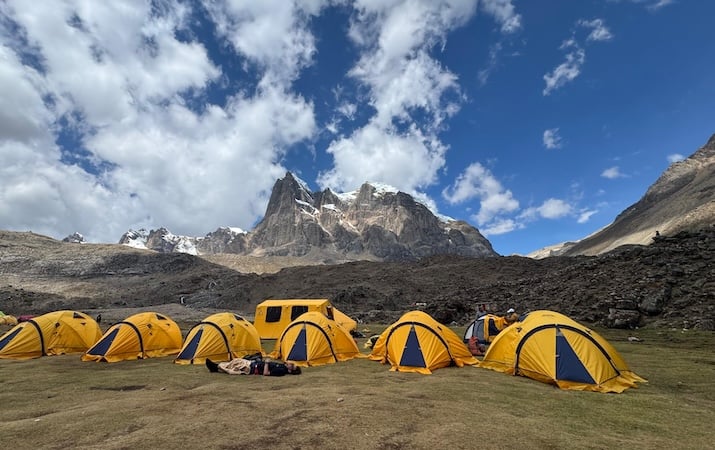
Santa Cruz Trek campsite
Before you go

Who this package is for

This package is for fit travellers who want to complete several demanding hikes at high altitude. It combines the 4-day Santa Cruz Trek and the 5-day Salkantay Trek with a challenging day hike to Laguna 69.

We recommend spending several days in Huaraz to acclimatize before Laguna 69 and Santa Cruz. Allow time to recover after Laguna 69, and plan a travel and rest period before starting Salkantay. Previous hiking experience and good physical fitness are recommended.

Recommended travel period

The package can only be arranged when all three services have availability for your dates. Check current departures and trail conditions before booking, especially outside the main trekking season.

How booking works

  1. Choose your preferred dates. Tell us when you would like to do the Huaraz tours and the Salkantay Trek.
  2. We check all three services. We confirm availability for Laguna 69, Santa Cruz and Salkantay, and check that your dates leave time for acclimatization and travel.
  3. Receive your booking details. Once all three services are confirmed, we send your itinerary, inclusions, payment details and next steps.

The package is confirmed only when all three services are confirmed. Please wait for written confirmation before booking transport between Huaraz and Cusco.

Frequently asked questions

Is the Laguna 69 tour really free?

The standard Laguna 69 group tour is included at no extra tour price when you book this tour package. It includes transport and a Spanish-speaking guide. The Huascarán National Park entrance fee, meals, drinks and personal expenses are extra.

Is transport between Huaraz and Cusco included?

No. You arrange and pay for transport between Huaraz and Cusco separately. Depending on available schedules, you may travel via Lima. Allow enough time for the connections and a rest day before the Salkantay Trek.

How many days should I spend acclimatizing in Huaraz?

We recommend allowing several days in Huaraz before hiking to Laguna 69 or starting the Santa Cruz Trek. Laguna 69 is a challenging hike that reaches approximately 4,625 metres. The right acclimatization plan depends on your previous time at altitude and how you feel.

Is the Machu Picchu entrance ticket included?

Machu Picchu entry depends on the Salkantay option you select and the ticket availability confirmed for your booking. Check your booking details to see whether your entrance ticket and preferred circuit are included. Huayna Picchu and Machu Picchu Mountain tickets are optional extras.

Ready to plan your package?

Tell us your preferred travel dates. We will help you coordinate the tours and confirm the package details.

Plan this package now
From $ 531.00
$ 510.00 per person
+ Free Laguna 69 included
WhatsApp Wander Free Peru